

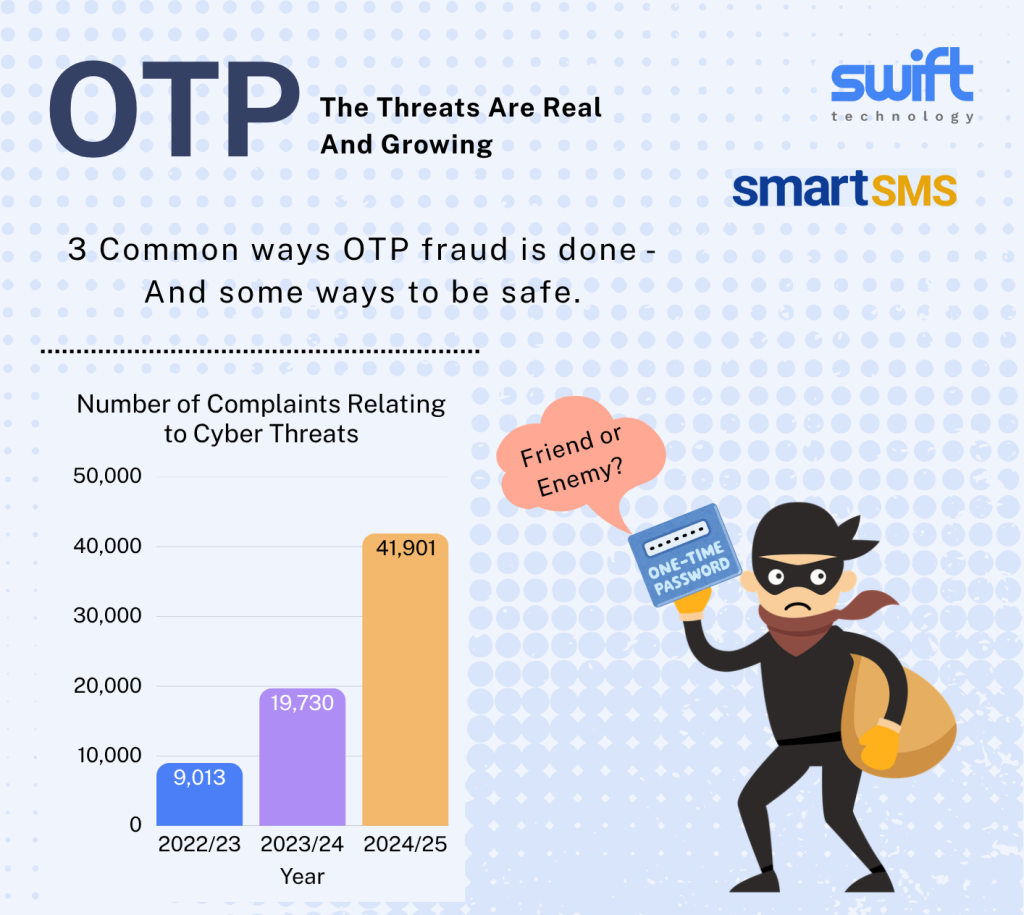
You’ve seen it a hundred times. You log into your bank account, make an online purchase, or transfer money, and your phone buzzes with a six-digit code. While this system seems simple, the rapid rise of OTP fraud in Nepal means those few digits are now the thin line standing between you and financial theft.
That little code is a One-Time Password, or OTP. And while it takes just a second to use, most people have no idea how powerful or how vulnerable it really is.
Digital banking and mobile transactions are booming across Nepal. Today, OTPs act as the frontline guard of our financial lives. But here’s the uncomfortable truth: fraudsters have found clever ways to bypass our security. Most people don’t realize they are targets until it’s too late.
This blog is your guide to understanding what OTP is, why it matters, and most importantly, how to protect yourself.
What is an OTP and Why Do We Use it?
An OTP is a temporary, one-time-use code, usually 4 to 6 digits, sent to your registered mobile number or email to verify your identity during a transaction or login. Unlike your regular password, an OTP expires within minutes and can only be used once. This makes it a powerful layer of security.
Think of it like a key that self-destructs after one use. Even if someone knows your bank password, they still can’t access your account without the OTP that arrives on your phone.
This system is called Two-Factor Authentication (2FA), relying on something you know (your password) plus something you have (your phone). Because of this extra layer, your bank, digital wallet, or mobile banking app requires that unique code every single time. Therefore, knowing your password alone is no longer enough to gain access.
Today, banks and financial institutions across Nepal heavily rely on SMS-based OTPs to authorize transactions. Furthermore, from Kathmandu to rural towns, mobile banking, e-wallets, and online payments are now deeply embedded in everyday habits. Because of this massive digital shift, the simple OTP has ultimately become our most critical security checkpoint.
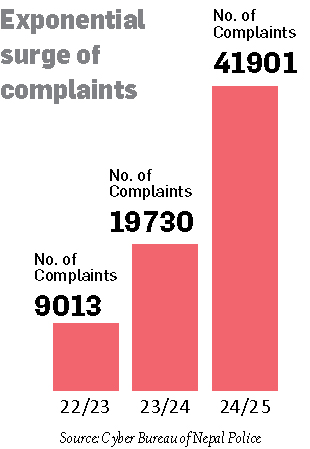
The Threats Are Real And Growing
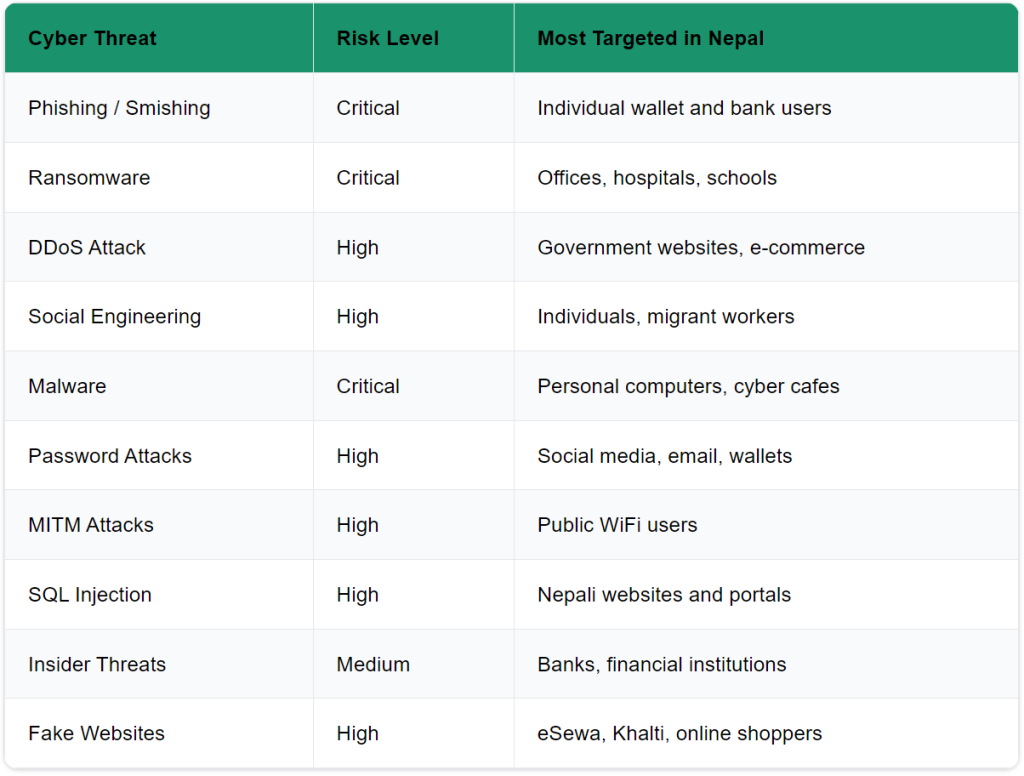
Unfortunately, the very thing designed to protect you has also become a high-value target for scammers. To execute OTP fraud in Nepal, modern scammers rely on three primary methods:
1. Social Engineering: “Dai, OTP bhandinu na!”
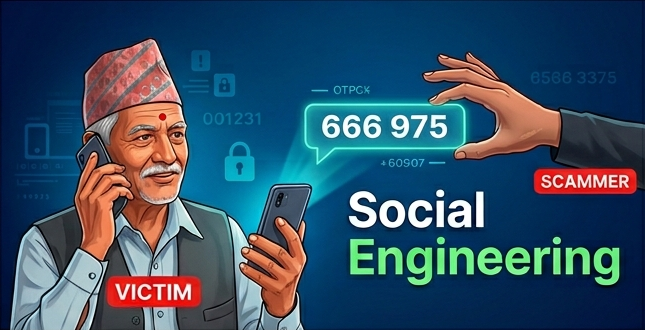
This is by far the most common attack, and it doesn’t require any sophisticated technology. It just requires a convincing voice.
A scammer calls you pretending to be a bank employee, a government official, or even someone from a telecom company. They create urgency: “Your account is about to be blocked,” “You’ve won a prize,” “We need to verify your identity immediately.” Then they ask for your OTP.
In Nepal, where people tend to be polite and trusting over phone calls, this type of fraud has claimed thousands of victims. The scammer hangs up the moment they get the code, and within seconds, they drain your account.
Remember: “No legitimate bank, company, or government official will ever ask for your OTP over a phone call or message. Ever.”
2. Phishing: Fake Pages, Real Losses
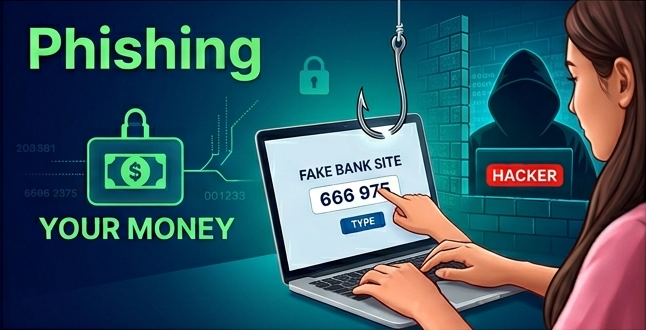
These attacks fool you into entering your OTP on a fake website that looks exactly like the real one. You might receive a message saying: “Your account has been suspended. Click here to verify.” The link takes you to a page that looks like your bank’s website; same logo, same colors, same layout, but it’s a trap.
When you enter your credentials and OTP, the attacker captures them in real time and uses them immediately to drain your account.
With internet usage growing in Nepal, especially among younger generations accessing banking services through smartphones, phishing attacks are becoming increasingly sophisticated. A fake page today can be nearly indistinguishable from the real thing.
Always check the URL carefully. A real bank website will have an official domain (e.g., .com.np). If something feels off, close the page immediately and call your bank directly.
3. SIM Swapping: When Your Number Is No Longer Yours
This is the most technically advanced attack, and it’s alarmingly effective.
A SIM swap happens when a fraudster convinces your mobile network operator to transfer your phone number to a new SIM card under their control. Typically, they achieve this by impersonating you using stolen personal details, such as your name, citizenship number, or account information. Furthermore, these details are often obtained beforehand through phishing or earlier data breaches.
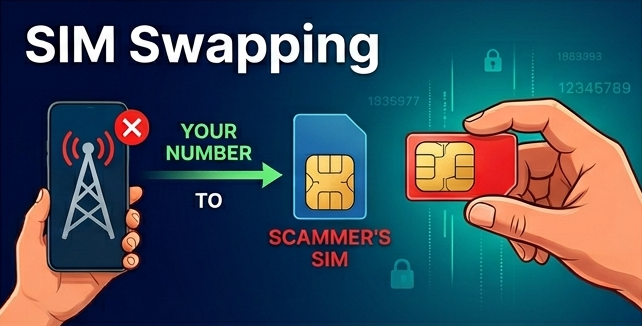
Once they have your number, every OTP meant for you goes directly to them. Your phone will suddenly lose signal, and by the time you realize what happened, your bank accounts may already be emptied.
In Nepal, telecom providers are increasingly aware of this threat, but the responsibility also lies with users to safeguard their personal information carefully and report any sudden loss of signal to their telecom provider immediately.
Stopping OTP Fraud in Nepal: Why Education Matters
Nepal is at a pivotal moment in its digital journey. The Nepal Rastra Bank has been actively pushing for financial inclusion and digital payments. Mobile banking users are growing every year. QR payments are everywhere, from supermarkets to street vendors.
But digital growth without digital literacy is a ticking time bomb.
Many victims of OTP fraud in Nepal are first-time digital banking users, elderly citizens, or people in semi-urban areas who are new to mobile transactions. They trust the technology but haven’t been educated about its vulnerabilities. Schools, banks, and tech companies all share a responsibility to close this awareness gap.
The question isn’t whether OTP fraud in Nepal can happen to you—it is already happening every single day. The question is whether we can stay one step ahead.
How to Protect Yourself from OTP Fraud: Simple Rules That Could Save You
You don’t need to be a tech expert to stay safe. You just need to follow these rules:
1. Never share your OTP with anyone – not a bank employee, not a telecom agent, not a friend. No one legitimate will ever ask for it.
2. Ignore urgency. Fraudsters deliberately create panic to make you act without thinking. Take a breath. Verify the source independently.
3. Check URLs before entering any information online. Look for the padlock icon and confirm the website domain is correct.
4. Contact Cyber Bureau Nepal in case of OTP or Online Fraud.
5. Set up alerts on your bank account so you’re notified of every transaction immediately.
6. Report a sudden loss of phone signal to your network provider right away; it could be a SIM swap in progress.
7. Never click links in unsolicited SMS or email messages asking you to verify your account.
The Role of Reliable OTP Delivery in Security
Here’s something most users don’t think about. The security of an OTP doesn’t just depend on you; it also depends on the reliability and integrity of the delivery system.
The security of an OTP doesn’t just depend on you; it also depends on the reliability and integrity of the delivery system.
This is where the infrastructure behind OTP delivery becomes critically important. Swift Technology built the Smart SMS platform with exactly this in mind. Banks and financial institutions across Nepal use Smart SMS to deliver OTPs instantly, securely, and reliably. The platform easily handles high-volume delivery while fully supporting Nepal’s telecom infrastructure. Thanks to this robust design, the critical last mile of OTP delivery never becomes a weak link.
When your bank sends you an OTP in under a second, that’s not an accident; it’s the result of a robust system working behind the scenes to protect you.
Final Thoughts: Your Six Digits, Your Responsibility
OTP is one of the smartest security tools we have in the digital age. But like any tool, its strength depends on how wisely we use it.
As Nepal continues its exciting journey into digital finance, all of us, banks, tech companies, regulators, and everyday users have a role to play. Technology can build the walls, but awareness is what keeps the doors locked.
So the next time your phone buzzes with those six digits, remember: that code is yours alone. Guard it like cash in your wallet. Share it with no one. And stay informed because in the world of digital security, knowledge truly is your best protection.
Get in touch
Swift Technology Pvt. Ltd. is a leading software company based in Kathmandu, Nepal, providing digital banking solutions, remittance software, and enterprise communication tools, including Smart SMS, Nepal’s trusted OTP and bulk SMS delivery platform.
Content Writer and Editor: Hemant Acharya, Business Development Intern
CONTACT:
Swift Technology Pvt. Ltd.
3rd Floor, IME Complex
Panipokhari, Kathmandu, Nepal
Tel: +977-1-4002555, 4002535, 4002538
Mobile: +977 9802096758
Visit our Website: swifttech.com.np
Follow us on:
FAQ Section:
No legitimate commercial bank, digital wallet provider, or government official in Nepal will ever ask for your OTP over a phone call, SMS, or social media.
Immediately contact your bank’s customer service or digital support hotline to freeze your account. You should also report the fraud to the Nepal Police Cyber Bureau.
Absolutely not. No legitimate bank, financial institution, or government authority in Nepal will ever contact you via WhatsApp, Viber, or Telegram to resolve an account issue, offer a lottery prize, or request an OTP. If you receive a WhatsApp message displaying a bank logo or an official-looking name demanding action, it is a targeted social engineering scam. Block the number immediately.
First, contact your respective bank, e-wallet customer service, or digital support hotline immediately to freeze your accounts and stop any outgoing money. Second, file an official complaint with the Nepal Police Cyber Bureau by calling their helpline at 01-5319044 or emailing cyberbureau@nepalpolice.gov.np.
For highly secure fintech, digital banking, and reliable OTP delivery infrastructure (Smart SMS), you can contact Swift Technology Pvt. Ltd., based on the 3rd Floor, IME Complex, Panipokhari, Kathmandu. Reach their support team at +977-1-4002555 or visit their website at swifttech.com.np.


